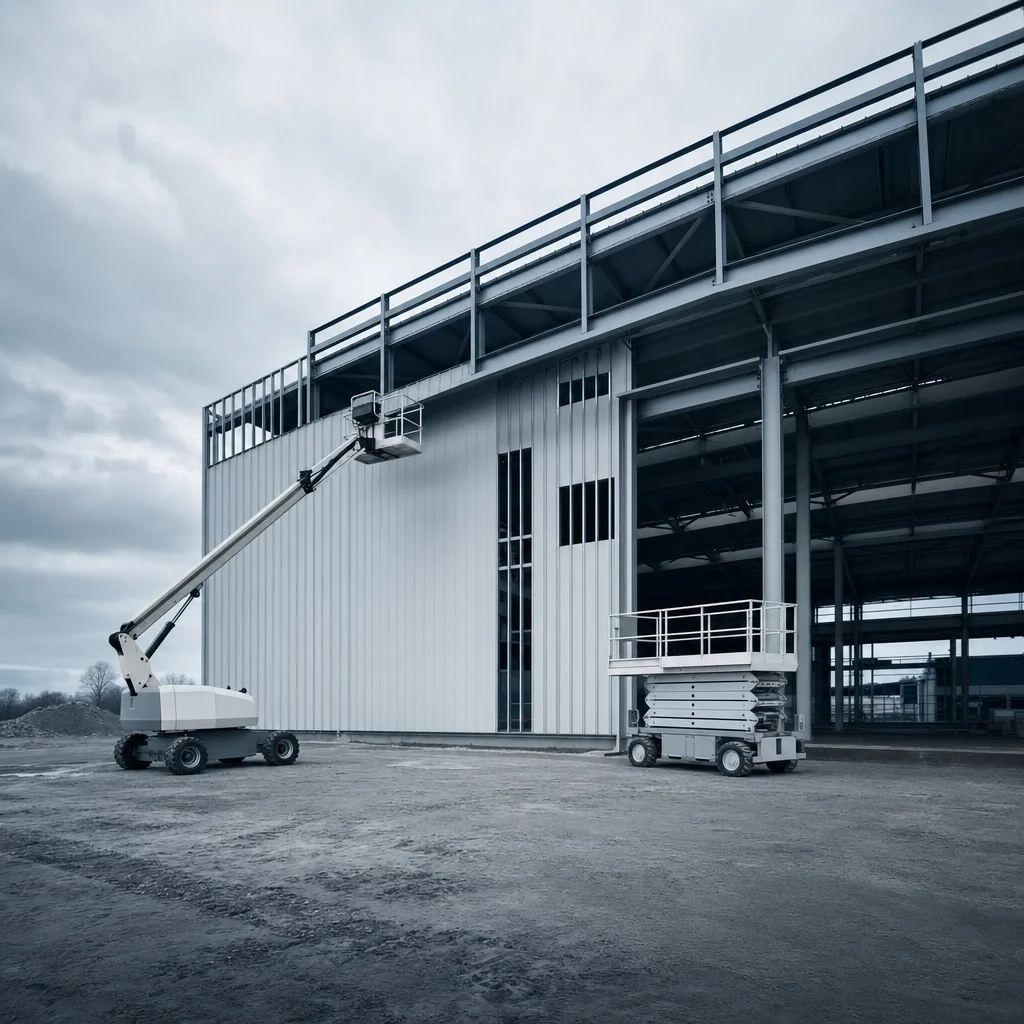
Map the job geometry first
- Can the machine sit directly below the task, or does it need to straddle drains, duct runs, or rails?
- Is the floor finished concrete, elevated decking, or compacted base?
- Will workers handle tools or materials that change platform capacity needs?
The local mix of large interiors—hangars, fulfillment aisles, and event halls—favors electric slab scissor lifts with tight turning, non‑marking tires, and low noise. For exterior steel, tilt‑wall panels, and site work on Oklahoma City clay, rough‑terrain models matter when ground softens after rain.
Wind and surface conditions around Oklahoma City
Open plains amplify gusts across jobsites and parking aprons. For any elevated work outdoors, the selected unit’s wind rating, the day’s advisory, and site rules govern platform height and extension. On wet weeks, clay can pump and slick up, affecting support. Wider wheelbase, foam‑filled or lug tires, and outriggers on certain models change how and where a scissor can stage, but actual limits come from the specific machine documentation and site procedures.
Narrowing the category
- Indoor maintenance and racking: electric slab scissor lifts sized to aisle width and doorway height. See /electric-scissor-lift-rental/.
- Exterior erection and unfinished pads: rough‑terrain scissor lifts with larger platforms and higher ground clearance. See /rough-terrain-scissor-lift-rental/.
- Need up‑and‑over reach around duct, wings, or conveyors: compare booms at /aerial-lift-rental/ or /boom-lift-rental/.
Typical measurements to confirm
- Platform height vs. task height, with room for hand tools or fixtures
- Stair, elevator, and doorway clearances from staging to work area
- Slab rating or ground bearing assumptions in work zones
- Local wind advisories for outdoor elevation periods
When a scissor isn’t the match
If the work is offset by obstacles or requires horizontal outreach, an articulating or telescopic boom may align better than a scissor platform. Interior spot picks or pallet moves may call for /forklift-rental/ or /telehandler-rental/ to stage materials before elevation.