Start with the access path
Before height, confirm how the lift gets to the work: - Doorway and hallway clearances in older buildings vs. new distribution interiors - Elevator and mezzanine limits if the task sits above grade - Aisle widths between racking, tooling, or exhibits
These constraints often steer choice toward narrower platforms with folding rails or shorter stowed heights. Large interiors typical here still reward compact turning circles to navigate long runs and tight service bays.
Platform height and capacity
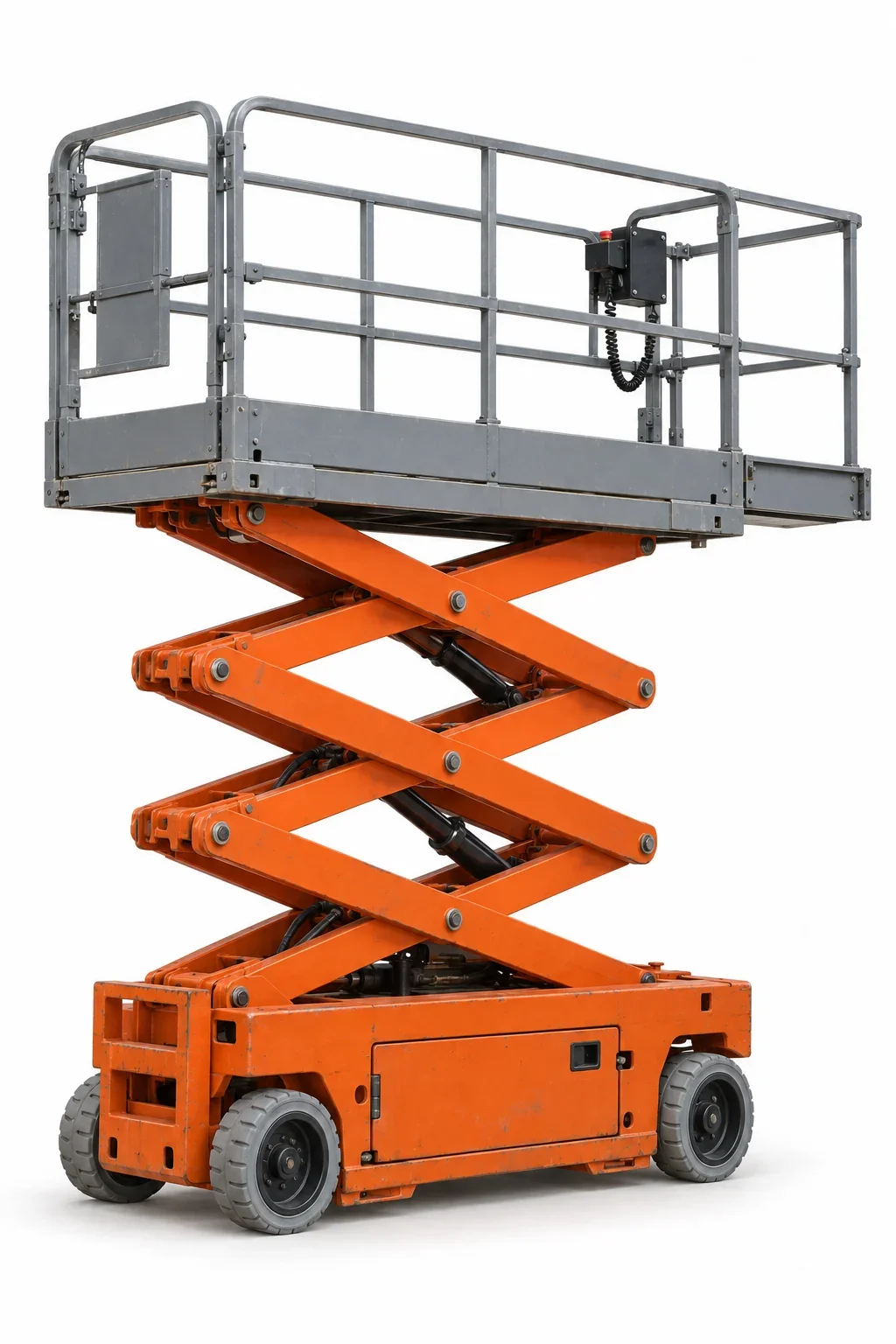
Set platform height to the work elevation with room for hand clearance. Platform capacity matters if lighting kits, duct sections, or fixtures ride up with technicians. Slab machines vary widely in deck size and extension deck length; longer decks help with straight‑on work along walls and ceilings.
Local building conditions that change the pick
- Smooth slabs favor non‑marking tires; check floor finish requirements.
- Air‑conditioned spaces and noise‑sensitive operations point to electric drive.
- Wind is less of a factor indoors, but large open bays can funnel drafts through doors; actual elevation limits follow the unit’s instructions and site rules.
When electric scissors aren’t ideal
If the task sits outdoors, over uneven ground, or requires more stance, move to /rough-terrain-scissor-lift-rental/. If the job involves reaching over aircraft tails, conveyors, or set‑back façades, review booms at /aerial-lift-rental/ or /boom-lift-rental/.
Quick spec checks that prevent rework
- Stowed height vs. lowest doorway on the route
- Machine weight vs. slab load ratings and any elevated deck limits
- Turning radius vs. aisle pinch points
- Charging access and ventilation policies inside the facility