Capacity at reach vs. headline capacity
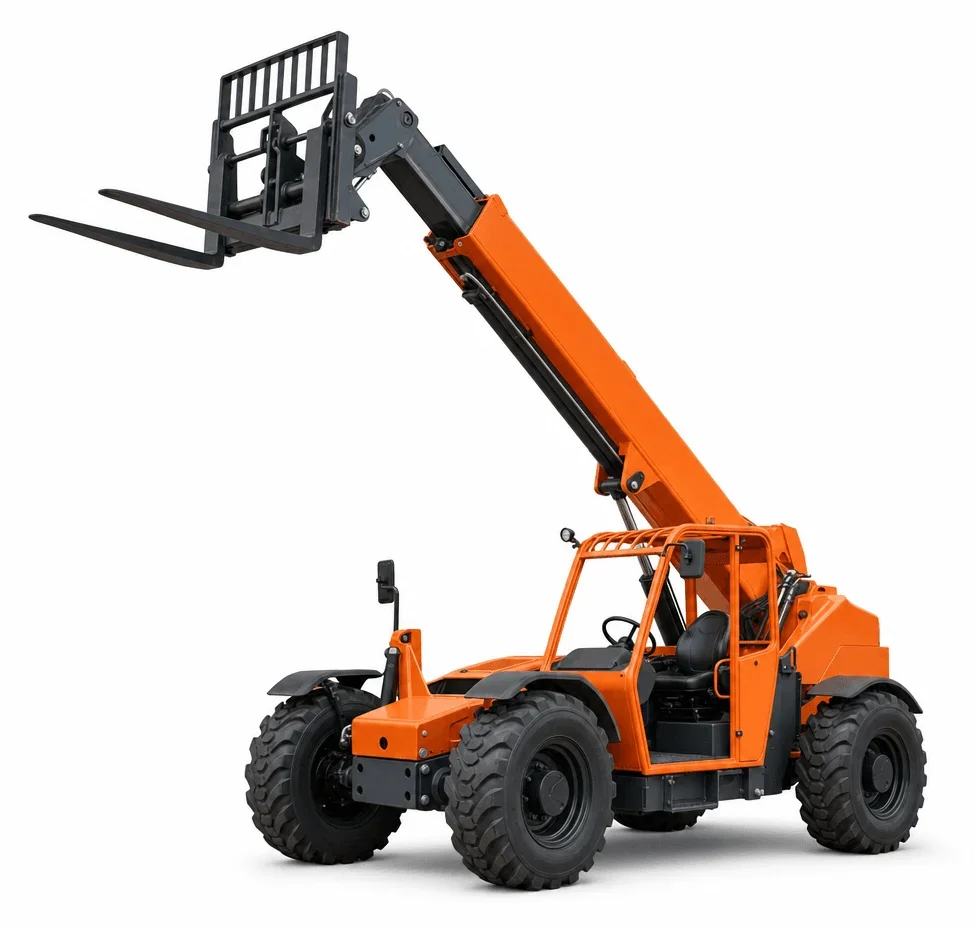
A telehandler’s top capacity only applies close-in. The critical number is capacity at the boom angle and extension needed to land the load. Measure the setback from the machine to the landing point, then check the load chart for that reach. Pallet weights, rigging, and attachment weights all count toward the total.
Site surface and approach
Unpaved laydown yards and wet seasons can turn access lanes soft. Wider tires and rough-terrain drivetrains help reach the drop zone, but the final stance must meet the machine’s leveling limits. Plan turning radii through temporary fencing and around stored materials common at local construction sites.
Wind, height, and placement accuracy
Elevated placements near building edges or open bays are more sensitive to gusts. Actual conditions, the unit’s instructions, and site procedures govern platform or fork positioning at height. For interior pallet handling or tight aisles where emissions and turning radius matter, a forklift at /forklift-rental/ may be the better comparison.
Typical Oklahoma City use cases
- Setting mechanical units onto mezzanines at distribution facilities.
- Moving pallets across uneven staging yards to framed structures.
- Supporting exterior work where cranes are not practical for short-duration picks.
Information to gather before calling
- Load weight including pallet and any rigging.
- Required lift height and forward reach to the landing spot.
- Ground conditions along the travel path and at the final stance.
- Clearance constraints at gates, slab edges, and within framed openings.
For elevated personnel tasks rather than material placement, review /boom-lift-rental/ or /articulating-boom-lift-rental/ depending on obstacle layout.